







Australia is playing a leading role in advancing care for...
Read MorePCD and Fertility: Can People with Primary Ciliary Dyskinesia Have Children?
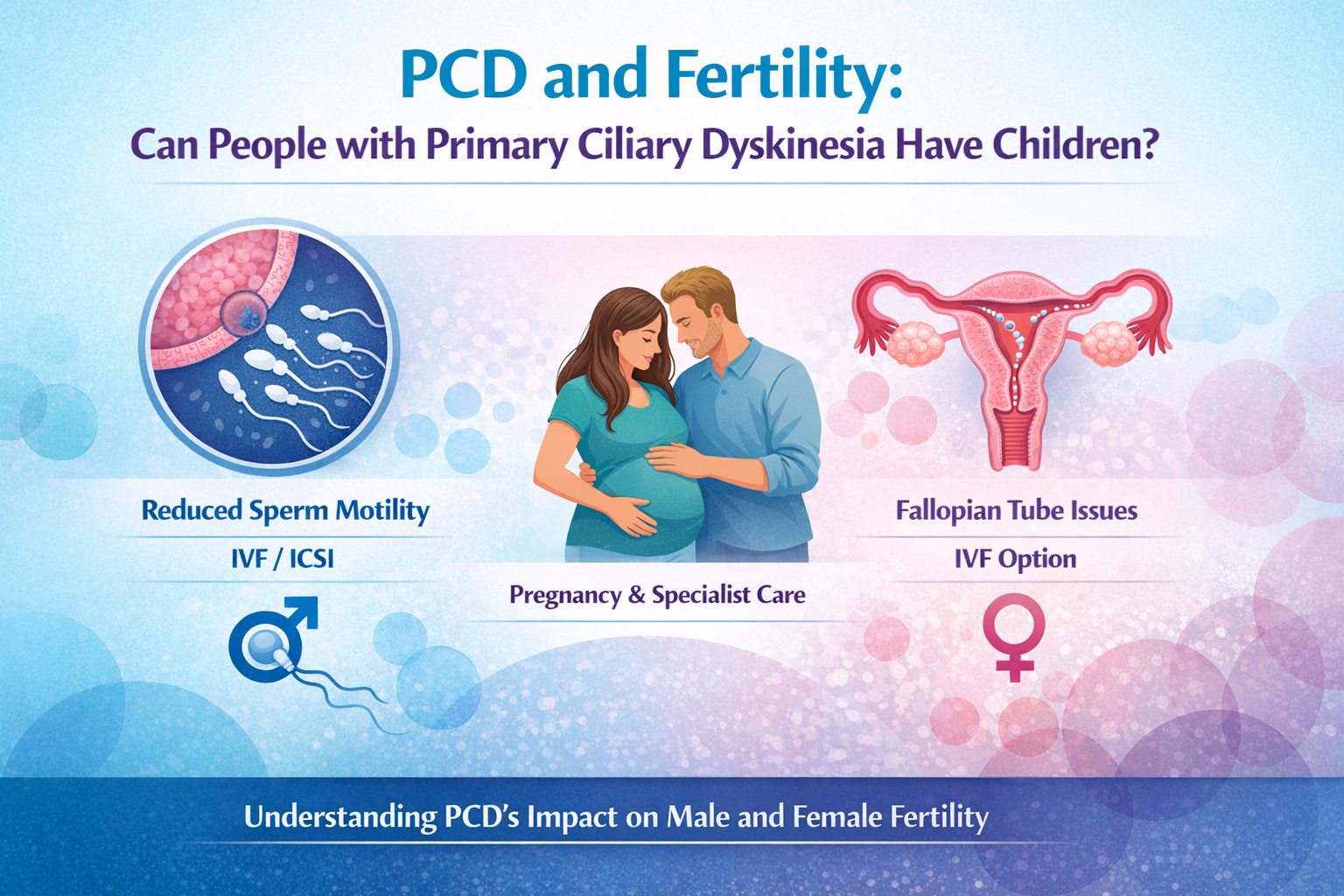
Primary Ciliary Dyskinesia (PCD) is a rare genetic condition that affects the function of tiny hair-like structures called cilia, which play a critical role in the respiratory system, sinuses, and reproductive organs.
While PCD is most commonly associated with chronic lung and sinus disease, it can also have a significant impact on fertility in both men and women.
Understanding this connection is essential for individuals with PCD who are planning a family, as well as for clinicians supporting their care.
How Does PCD Affect Fertility?
Cilia are not only found in the airways — they are also present in the reproductive system.
- In men, similar structures called flagella enable sperm to move.
- In women, cilia line the fallopian tubes and help transport the egg toward the uterus.
When cilia do not function properly, as in PCD, this can interfere with natural conception.
Male Fertility and PCD
Men with PCD are often affected by reduced sperm motility, a condition known as asthenozoospermia.
Although sperm may be produced normally, their ability to move effectively is impaired due to dysfunctional flagella.
Key considerations:
- Many men with PCD are subfertile or infertile
- Sperm count may be normal, but movement is reduced Natural conception can be challenging, but not impossible — some men with PCD are able to conceive naturally
Fertility options:
Assisted reproductive technologies (ART) have made parenthood possible for many men with PCD, including:
- IVF (In Vitro Fertilisation)
- ICSI (Intracytoplasmic Sperm Injection) — often the most effective option, where a single sperm is injected directly into an egg
Female Fertility and PCD
Women with PCD may also experience reduced fertility, although many are still able to conceive naturally.
The issue lies in the fallopian tubes, where cilia help move the egg toward the uterus. When this movement is impaired, it can:
- Delay egg transport
- Reduce the likelihood of fertilisation
- Increase the risk of ectopic pregnancy
Key considerations:
- Fertility may be reduced, but not absent
- Some women conceive naturally
- PCD primarily affects the fallopian tubes, meaning IVF can be an effective alternative if natural conception is not achieved
Pregnancy Considerations for Women with PCD
Women with PCD can have successful pregnancies, but may require specialist care.
Because PCD affects lung function, pregnancy can place additional strain on the respiratory system.
Important factors:
- Monitoring of lung health throughout pregnancy
- Coordination between respiratory specialists and obstetric teams
- Early planning and support
With appropriate care, many women with PCD go on to have healthy pregnancies and babies.
When to Seek Fertility Advice
If you or your partner has PCD and are trying to conceive, it may be helpful to seek early guidance from:
- A fertility specialist
- A respiratory physician familiar with PCD
- A multidisciplinary care team
Early advice can help you understand your options and avoid unnecessary delays.
The Importance of Diagnosis
PCD is often underdiagnosed in Australia, with estimates suggesting that only a small proportion of cases are formally identified (10%).
Because symptoms of PCD overlap with other respiratory conditions, such as bronchiectasis, individuals may experience years of ongoing health issues without a clear diagnosis.
For some, fertility challenges — combined with lifelong respiratory symptoms — maybe the catalyst to seek official diagnosis that PCD could be an underlying cause.
Improving awareness of the broader impacts of PCD, including fertility, is essential to supporting earlier diagnosis, better care, and improved long-term outcomes.
Supporting Australians Living with PCD
At PCD Australia, we are committed to improving awareness, diagnosis, and outcomes for people living with Primary Ciliary Dyskinesia.
This includes recognising the full impact of PCD — not just on respiratory health, but on important life stages such as family planning and fertility.
Can people with PCD have children?
Yes. While fertility may be reduced, many people with PCD can have children, either naturally or with assisted reproductive support.
Is PCD infertility permanent?
Not always. Many individuals with PCD can successfully conceive with treatments such as IVF or ICSI.
Supporting Australians Living with PCD
At PCD Australia, we are committed to improving awareness, diagnosis, and long-term outcomes for people living with Primary Ciliary Dyskinesia.
This includes advocating for holistic care — recognising that PCD affects not just the lungs, but many aspects of life, including family planning and fertility.
Recent Posts
PCD and Fertility: Can People with Primary Ciliary Dyskinesia Have Children?
Primary Ciliary Dyskinesia (PCD) is a rare genetic condition that...
Read MoreYou Don’t Know What You Know Until You Ask … So We Did
PCD Australia recently circulated a Listening Survey to gain a...
Read MoreGlobal Collaboration Strengthens Understanding of Primary Ciliary Dyskinesia
A growing global effort is underway to better understand the...
Read More